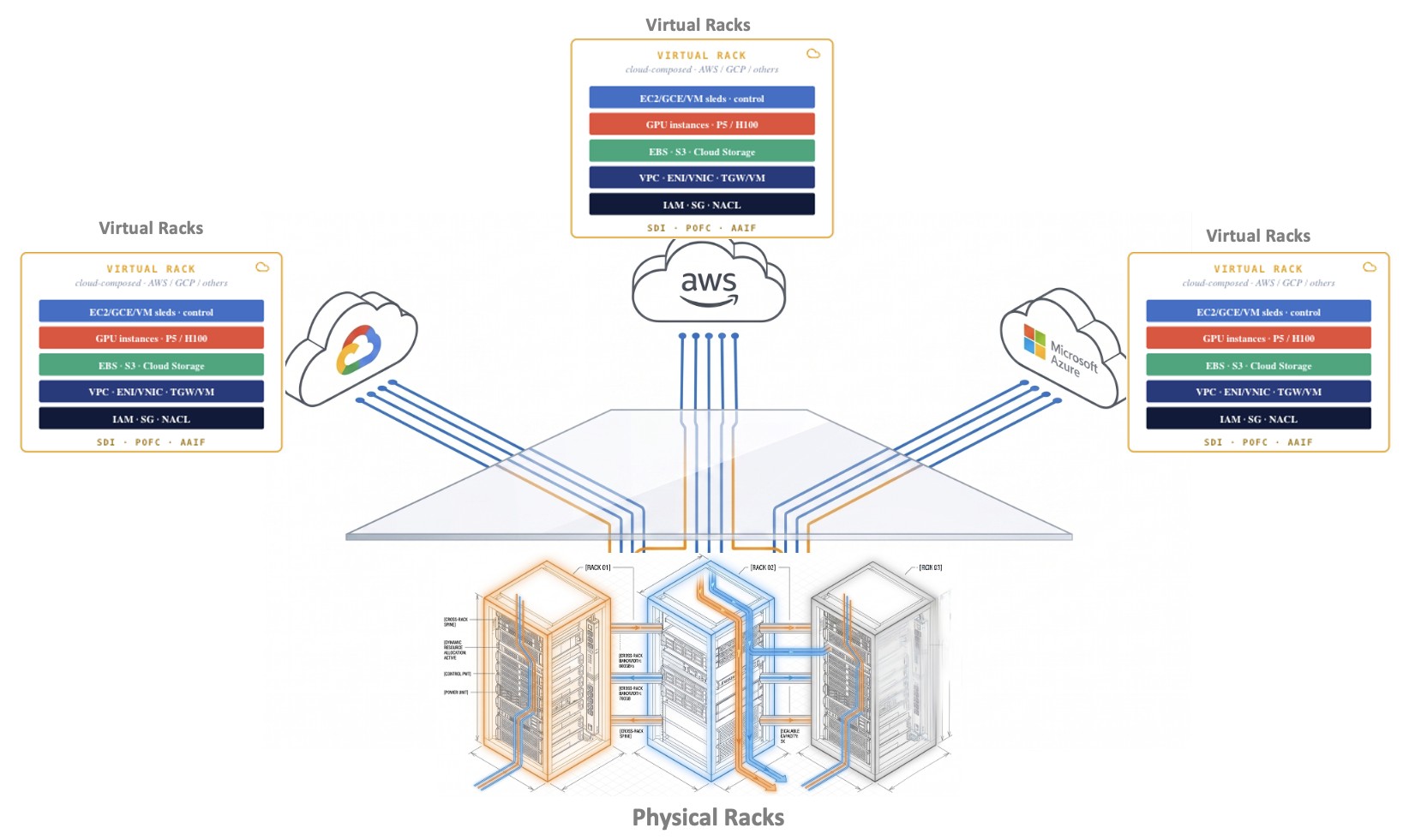
AnaRack is a heterogeneous rack chassis for loosely-coupled enterprise AI — inference, fine-tune, MoE serving, agentic chains. CPU controls. GPU serves. Standard Ethernet between them. Multi-generation GPUs and mixed accelerators run together on the same rack, with rack-wide workload placement below the application layer. Your CUDA stack, your K8s, your models — unchanged. AnaROS attaches as a runtime overlay; no application rewrites. Physical modularity. API-first. Cloud-native agility. The same abstraction extends to a virtual rack on public cloud — see Chapter 06.
These workloads benefit from stage independence — different stages on different capability subsystems, refreshed on different clocks, scheduled per pipeline. Heterogeneous beats homogeneous when the bottleneck moves stage-to-stage.
Today, enterprise AI infrastructure is bespoke — every workload assembles a different pile of servers, switches, and storage. AnaRack makes that the wrong question. The chassis is the answer; the modules are the question.
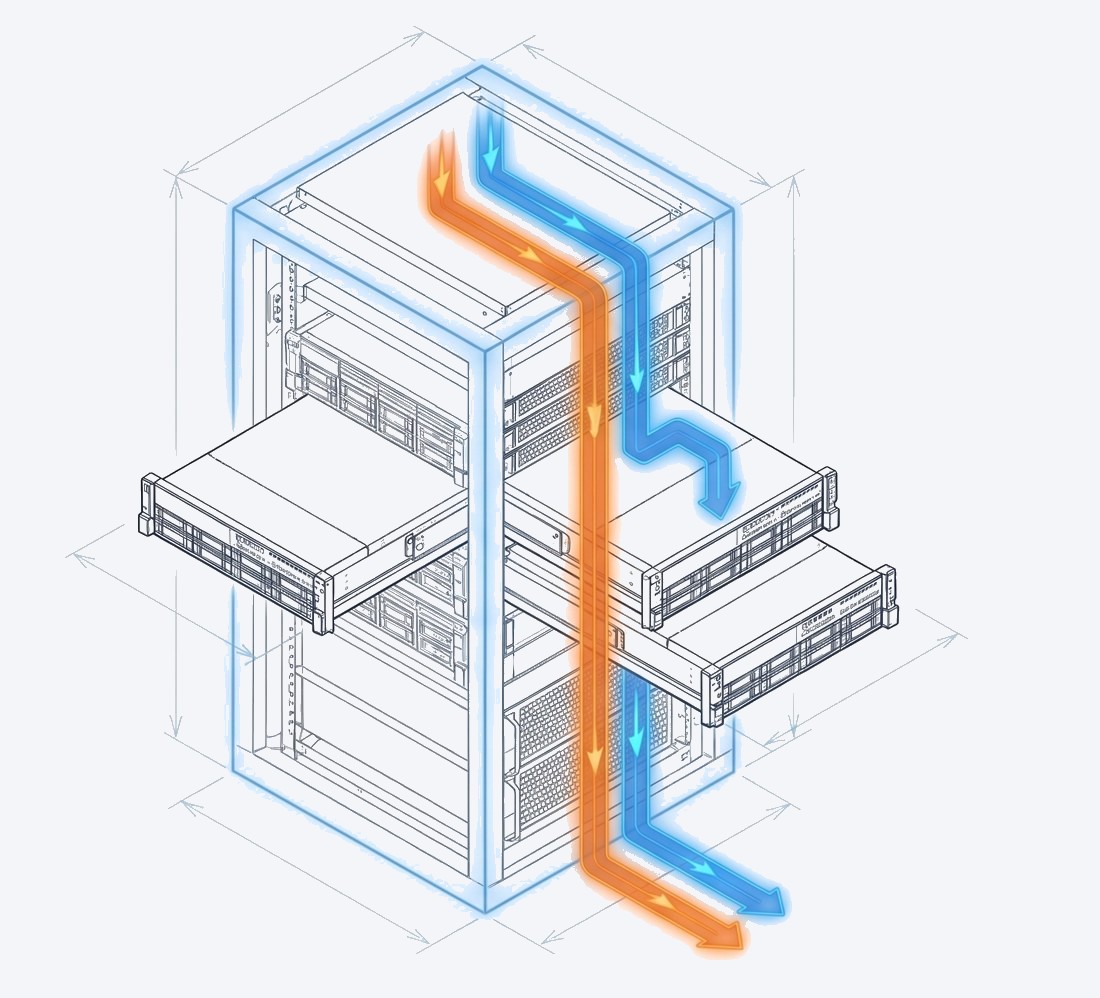
Multi-zones standardize the surface that AnaROS schedules onto. Every zone accepts any third-party drawer that conforms to its SDI contract. The drawers can change. The chassis doesn't.
x86 / ARM compute sleds carrying the control plane, services, and data-prep stages of the pipeline.
PCIe shelves carrying heterogeneous GPU payload — drawers swap on their own clock, vendor-neutral.
Leaf/spine fabric · out-of-band management · scale-up + scale-out + scale-cross under one plane.
NVMe-oF shelves, memory pools, and object tiers — drawer-class storage and AMSF Tier 0.5 staging surfaced through SDI.
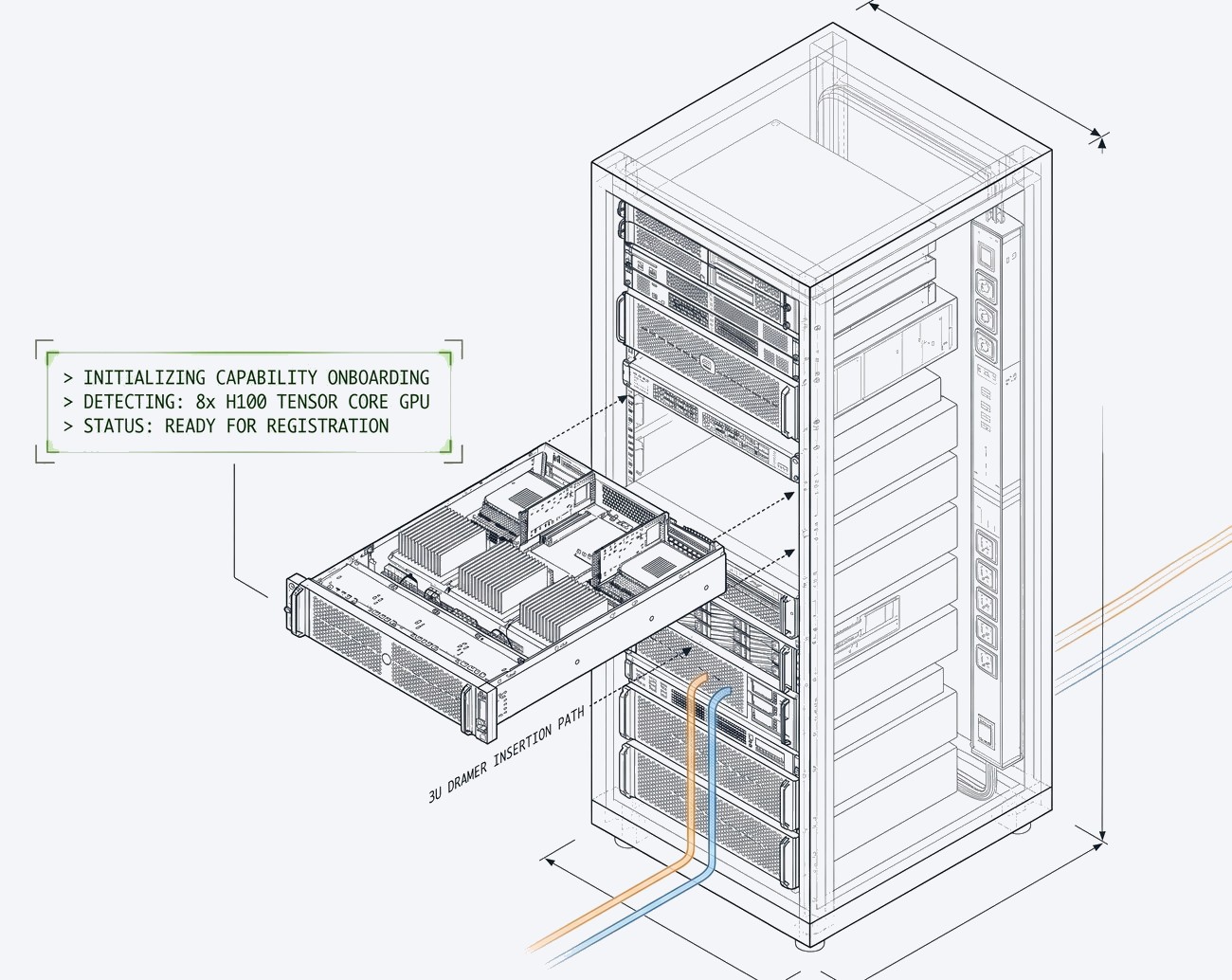
The moment a subsystem on a rack slides into a chassis, AnaRack's SDI layer register it, fingerprints its capabilities, runs a class probe, and onboard it onto AnaRack. From that point on, the subsystem is no longer a piece of hardware — it's a logical capability the platform can schedule, below the application layer.
3rd-party hardware integrates through the SDI contract for its class. Onboarding is minutes, not weeks. Removal is a hot-swap, not a maintenance window.
Every third-party drawer that lands in an AnaRack slot walks the same four-step journey through the SDI contract for its class. Vendor-neutral on the hardware side; uniform contract on the platform side. The chassis stays the same — the drawers do not have to.
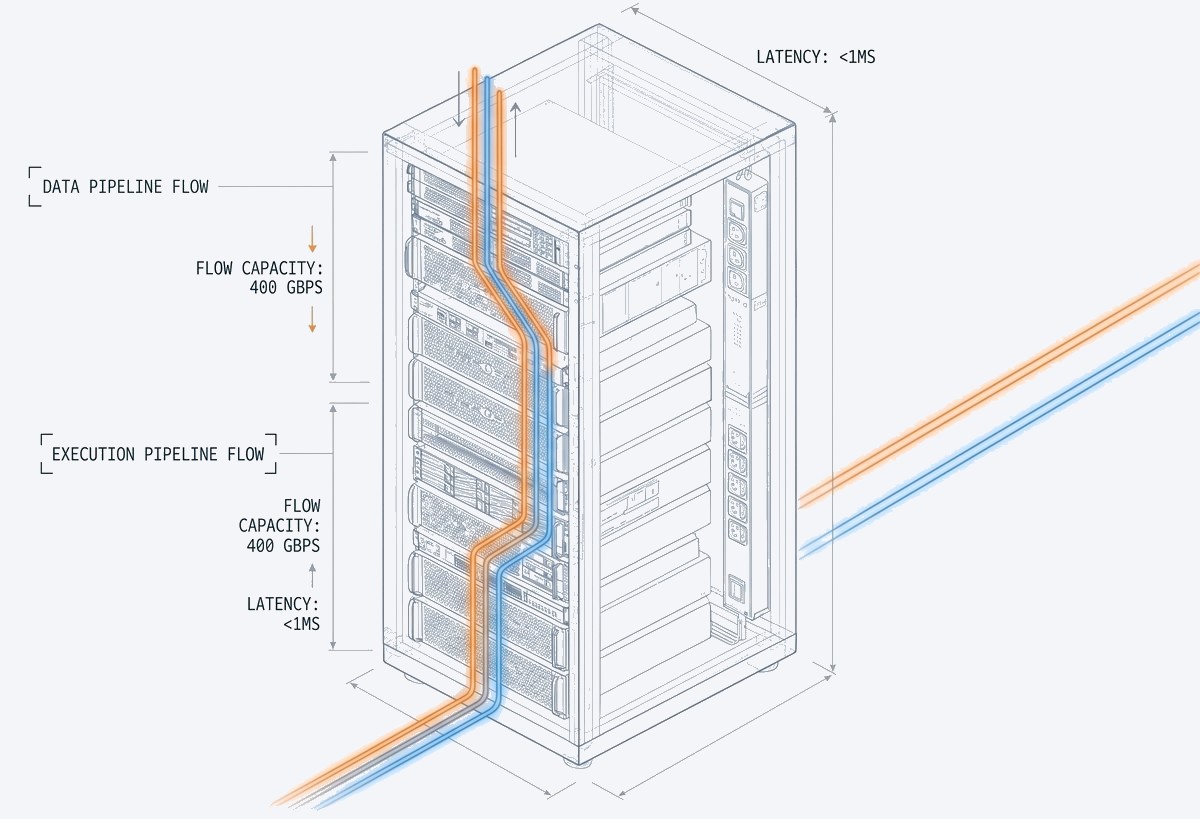
Detect · Register · Abstract · GovernIf the horizontal drawers represent the system's potential energy, the vertical pipelines represent its kinetic energy. These are the live AI workflows coursing through the chassis — model weights streaming in, inference requests streaming out, telemetry rising back to the control plane.
Pipelines abstracts the underlying hardware. AnaRack routes each workflow onto the most efficient governed drawer, on demand, and reshapes the topology as the workload mix shifts. The same chassis serves a thousand different pipelines.
Model weights, RAG context, telemetry, state synchronization — anything orchestrative moves through the data & control plane. AnaROS Governor lives here; AnaRack ferries its decisions to the drawers.
Live inference requests, dynamic compute scaling, response generation, parallelized batches — anything productive moves through the execution plane. Sub-millisecond round-trip across drawers, governed end-to-end.
A pipeline carrying an inference workload — agentic call, RAG query, fine-tune step — arrives at the AnaRack runtime. It carries intent, not a hardware target.
AnaRack's control plane reads the registered drawer pool, applies the pipeline's SLO and tenant policy, and directs the flow to the most efficient governed drawer available right now.
The selected drawer provisions exactly the compute the pipeline needs — no more, no less — and the workflow proceeds. Telemetry returns up the data & control plane.
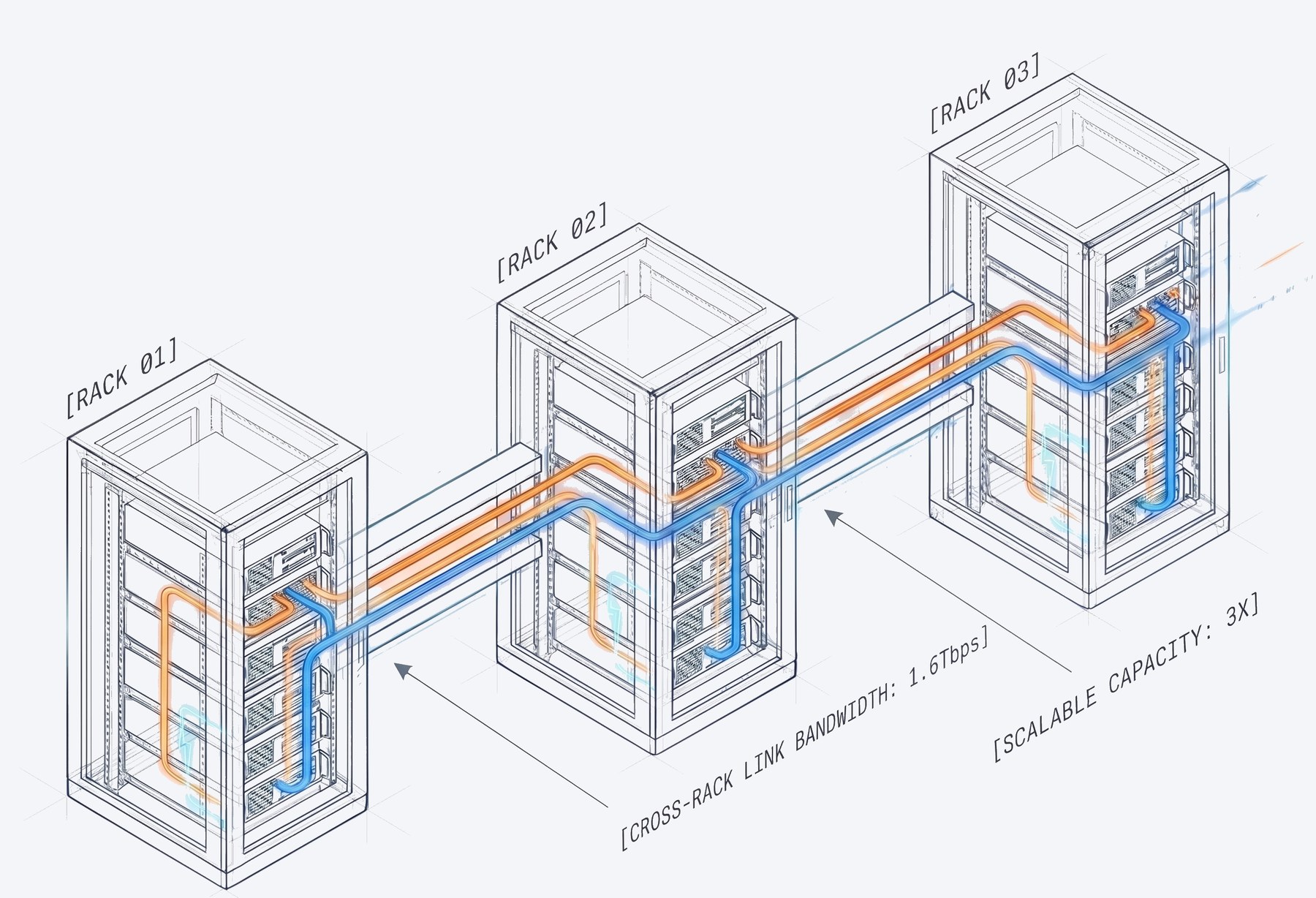
Slot in additional hardware and AnaRack takes care of the rest. The SDI layer discovers the new drawer or rack the moment it lands, abstracts its raw silicon into logical TFLOPS, vRAM, and bandwidth, and utilizes it inside the same governed runtime as the original chassis. Cross-rack spines between racks. No re-architecture. No application rewrites. The pipelines never see new hardware — they just get more of it.
Every property of the single-chassis runtime extends cleanly across racks. Pipeline X-Ray, POFC fabric, telemetry, and the resource ledger correlate one stack of operation with full visibility, traceability, and governance — at any scale. Expandable, stackable to N racks per pod. The chassis grows; the contract doesn't.
Every cloud-composed AI environment lines up against the same five elements an on-prem AnaRack chassis exposes: EC2 sleds for control · GPU instances for compute · EBS+S3 for storage · VPC for fabric · IAM/SG for the policy plane. The SDI contract that AnaRack defines holds across both. The POFC fabric correlation and AAIF verdict engine attach the same way. Cloud GPUaaS isn't a separate product category — it's a virtual rack you assemble per-workload.
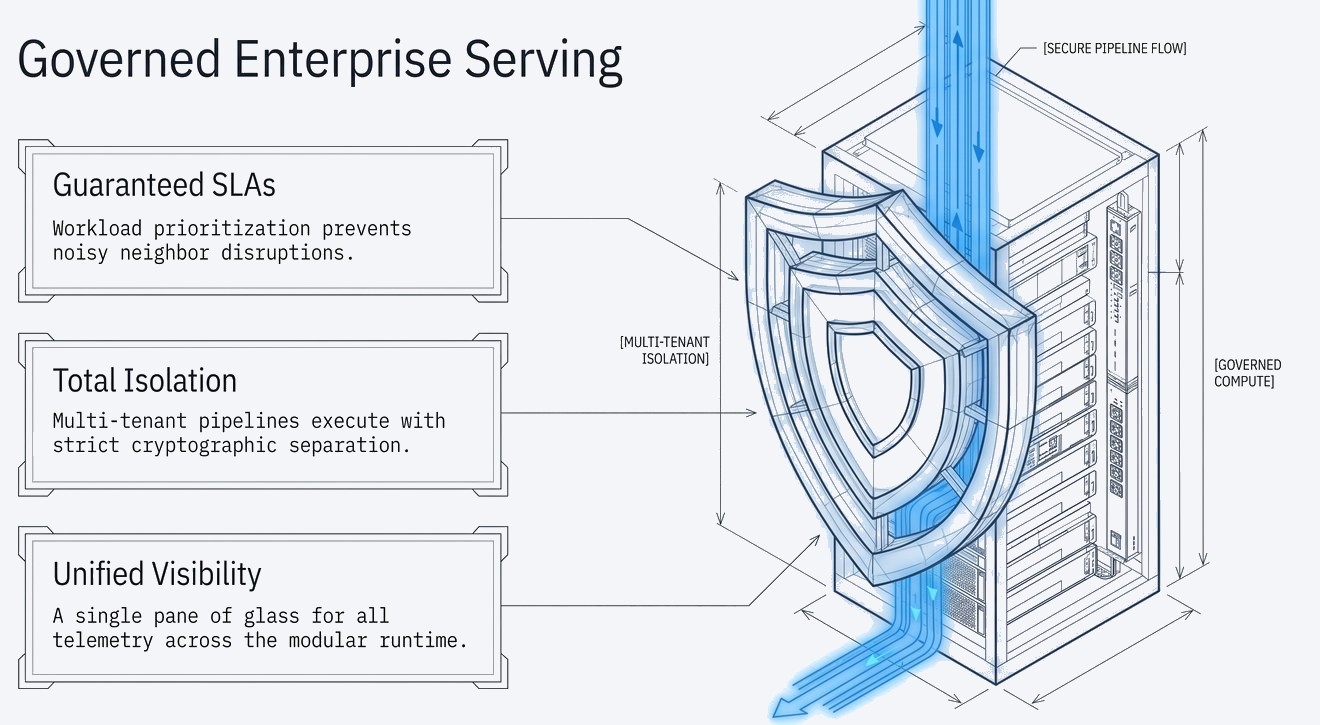
Every enterprise pipeline carries three things the chassis has to honor: a tenant identity, an SLO budget, and a chargeback line. AnaRack makes all three first-class properties of the runtime — workload prioritization happens at the drawer level, not in a side-car queue. Noisy neighbors get rate-gated before they ever touch a paying tenant's p99, and every SLA is observable, attributable, and chargeback-friendly out of the box.
Multi-tenant pipelines execute behind strict cryptographic separation, with tenant identity carried into every fabric hop — no shared-fate at the GPU, no implicit memory crossing. And every drawer, every pipeline, every hop reports into the same telemetry plane: pipeline X-Ray, POFC fabric, and resource ledger all stitched into one pane of glass for the entire modular runtime.
4U PCIe Gen5 expansion Internal PCIe Gen5 switch fabric provides programmable host:slot partitioning — not a fixed ratio chassis. BMC integration native to AnaROS; hex-cell filter slides out from the front; SDI onboarding on first power. Available for design partner pilots.
The top of the family — a 2U Ethernet switch at 51.2 Tbps non-blocking, available today, anchors the rack spine for scale-up within the rack and scale-out across the pod. SONiC as the open, hardened network OS for the data plane; AnaROS-native control plane for SDI onboarding, switch-port-to-pipeline correlation (POFC), and AAIF verdicts. The rest of the portfolio — aggregation, ToR, and edge — ships with SONiC + AnaROS stack, and tracks the next silicon generation on the same compatibility envelope. One vendor of record from silicon to SLO, across every tier. Available for design partner pilots.
AnaRack delivers the physical modularity of hardware combined with the unyielding agility of cloud-native software. The same governed engine runs on your homelab today — bring us a workload, we'll instrument it across the drawers and propose a chassis profile.